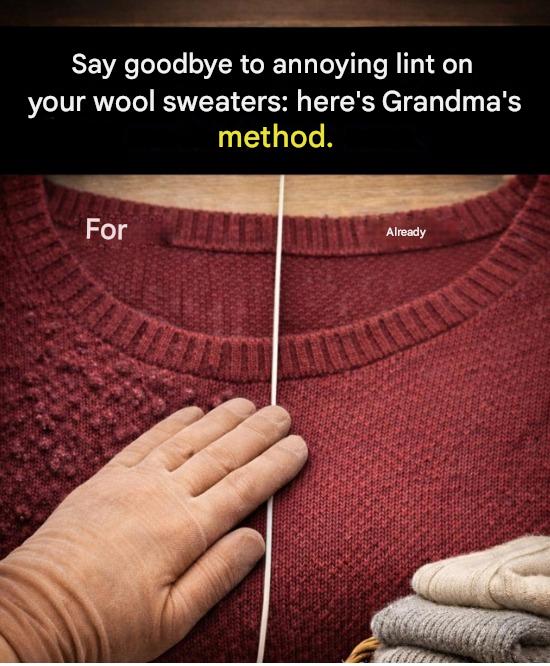
Have you ever pulled out your favorite sweater and thought it’s lost its shine? Those little balls that appear as if by magic sometimes give the impression that the garment has aged too quickly. However, this phenomenon affects almost every wardrobe, even the most carefully curated. The good news is: if you understand what’s behind these balls, you’re already a big step closer to having wool sweaters that always look stylish and comfortable, season after season. Why do wool sweaters pill so easily? Before we reach for a miracle cure, let’s first consider the cause. Pilling isn’t a manufacturing defect or a sign of neglect; it’s simply a natural reaction of the fibers. Wool, like cashmere, is made up of fine, supple fibers that tend to shift. With friction—against a coat, a handbag, or even a chair—some fibers rise to the surface and become entangled, creating those familiar little balls. Another often-misunderstood point: the finer and softer a fiber is, the more susceptible it is to pilling. Paradoxically, a soft, high-quality sweater can pill faster than a stiffer one. Washing also plays a significant role: water, the movement of the drum, and contact with other garments amplify these microscopic frictions, invisible to the naked eye… until they are. Pilling: an enemy of style, not quality. To continue, click the button below the ad ⤵️